







21tnt
The Expiration of Fundamentalism
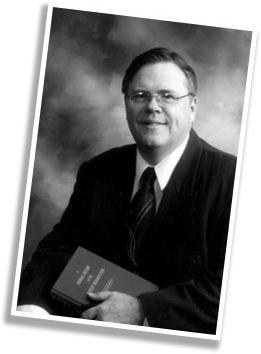
James Beller
Fundamentalism as a classical movement expired long ago.
The purpose of this writing is to retool your mind. If your identity is cloudy, your direction is also. So let us proceed with sword drawn seeking to regain precious ground as independent Baptists.
For when for the time ye ought to be teachers, ye have need that one teach you again which be the first principles of the oracles of God; and are become such as have need of milk, and not of strong meat. 13 For every one that useth milk is unskilful in the word of righteousness: for he is a babe.
14 But strong meat belongeth to them that are of full age, even those who by reason of use have their senses exercised to discern both good and evil.
6:1 Therefore leaving the principles of the doctrine of Christ, let us go on unto perfection; not laying again the foundation of repentance from dead works, and of faith toward God, 2 Of the doctrine of baptisms, and of laying on of hands, and of resurrection of the dead, and of eternal judgment. Hebrews 5:12-Hebrews 6:2
One of the greatest stories of the American experience was the crucible of Isaac Backus. Most Americans cannot now comprehend the colonial theological battle over baptism. It was real and it carried grave consequences.
Isaac Backus was a Congregational preacher caught in the whirlwind of the Great Awakening of the 1740’s. After hearing a sermon from Eleazer Wheelock, Backus acknowledged his disparate condition before God, turned to Jesus Christ for his only remedy and was born-again by the Spirit of God. Backus thus became one of those derisively called “New Lights,” because he had embraced the Saviour and had a conversion experience.
He now began a search of the scriptures to see if there was any evidence of his former religious state. That is, he wanted to know exactly what he was scripturally when he was a christened member of the Congregational Church, but not yet a Christian. Ah, what John Clarke and Roger Williams insisted when they said, “Christening maketh not Christians,” became large in Backus’s mind. Clarke and Williams suffered for this affirmation as did Obadiah Holmes and many others. Without infant christening the New England colonists were not citizens. There was still a residue of this in Backus’s time.
After a period of much study, Backus simply came to the logical conclusion that infant sprinkling was not found in the Bible. Since the practice of infant sprinkling was not scriptural and had no warrant to be done, it simply expired. That is, it simply was a fiction and did not exist. We see the classic movement of historic Fundamentalism in the same light.
I want to bring three issues to your attention: Fundamentalism as a practice, Fundamentalism as a classic movement, and Independent Baptist Fundamentalism as a culture.
I. FUNDAMENTALISM AS A PRACTICE
We could define fundamentalism as a practice as the active defense of the fundamentals of the faith. All Baptist Christians should agree that we are to earnestly contend for the faith. I think we can see that contending is synonymous with fundamentalism as a practice. Fundamentalism as a practice is what the apostle Paul commands us to do in Jude :3, “…it was needful for me to write unto you, and exhort you that ye should earnestly contend for the faith which was once delivered unto the saints.” So in this sense, we are commanded to fundamentalism, fundamentalism as a practice. If we define fundamentalism as “contending for the faith,” it will always be a part of our walk.
Some may refer to this as “militancy,” as David Cloud writes:
“…to claim that Fundamentalism was NOT characterized by militancy for truth, to claim that fighting and separating have NOT been a significant aspect of historic Fundamentalism, is to fly in the face of history.”
The Five Pointed Creed of Fundamentalism
Concerning a creed, the movement of Fundamentalism militantly defended a number of essentials, usually encapsulated by the declaration of the 1910 General Assembly of the Northern Presbyterian church. They are:
1. Inerrancy of the Scripture (in the original languages)
2. Deity of Christ.
3. Blood Atonement
4. Bodily Resurrection
5. Christ’s Return
As a principled Baptist, I would say there is quite a bit missing from the short list of fundamentals. Principles of repentance and baptism immediately come to mind. While the 5 tenets are certainly good points of doctrine, it is an incomplete set of beliefs.
It is believed that articulation of basic fundamentalist beliefs can be traced to the Niagara Bible Conferences and in 1910, to the General Assembly of the Northern Presbyterian Church. It was there where a declaration was made which became known as the "Five Fundamentals.”
The fundamental creed of 5 tenets is accepted almost universally. George M. Marsden, in "Fundamentalism and American Culture," (1980) part III says this about the five points of the creed:
“The first formulation of American fundamentalist beliefs can be traced to the Niagara Bible Conference and, in 1910, to the General Assembly of the Presbyterian Church which distilled these into what became known as the ‘five fundamentals’:[7]
The inspiration of the Bible and the inerrancy of Scripture
The virgin birth of Christ.
The belief that Christ's death was the atonement for sin.
The bodily resurrection of Christ.
The historical reality of Christ's miracles.”
John Rice stated the five points with slight variation, in his book, “I am a Fundamentalist.”
Curtis Hutson also with little difference acknowledged this five pointed creed in his book “Who is a Fundamentalist.”
David Cloud also states the accepted creed (with a few extras) as:
“…the doctrine of the Trinity; the incarnation, virgin birth, substitutionary atonement, bodily resurrection and glorious ascension, and Second Coming of the Lord Jesus Christ; the new birth through regeneration by the Holy Spirit; the resurrection of the saints to life eternal; the resurrection of the ungodly to final judgment and eternal death; the fellowship of the saints, who are the body of Christ.” (See: http://www.wayoflife.org/database/fivefundamentals.html)
The five point creed of Fundamentalism has long been ingrained in the language of the independent Baptists. We have been socially engineered to accept its incomplete set of five tenets. This has devalued the first principles and caused a disregard for the ordinances of the New Testament local church.
Primary Principles Devalued
Heb. 5:12-6:2
1. Repentance and faith
2. Baptisms
3. Laying on of hands (ordination)
4. Resurrection
5. Eternal Judgment
If you doubt this consider the following four examples:
International Baptist Network
This fellowship was founded in the year 2005. Their web site provided the basis of their unity in their fellowship:
“What will hold together the International Baptist Network is fundamental doctrine. And what doctrine is fundamental to Christianity? First, the Bible is the inerrant, inspired Word of God without error, and is the only authority for Christians and churches. Second, Jesus was born of a virgin and is the God-Man. Third, the sinless Son of God died a substitutionary death for sinners and those who believe in Him can be forgiven of their sins and guaranteed a home in eternity with God. Fourth, the physical resurrection of Jesus Christ from the dead gives new life to all believers. Fifth, the bodily return of Jesus Christ at the end of this age will complete God’s plan and purpose on this earth.”[1]
So, to be clear, the new IBN is a Fundamentalist organization, based on the five tenets of fundamentalism.
John Piper
John Piper, the famed pastor of the Bethlehem Baptist Church of Minneapolis, Minnesota, has gone on record diminishing the primary principles. Several years ago, Piper led his independent Baptist church to adopt a new constitution. Since the church had a large contingency of Reformed persons, it was debated whether to allow believers who had not been properly baptized to become members. Piper addressed his congregation on the matter:
“The most obvious change… is allowing the possibility that a person may become a member who has not been baptized by immersion as a believer but who regards the baptismal ritual he received in infancy not as regenerating, but nevertheless (as with most Presbyterians) in such a way that it would violate his conscience to be baptized as a believer. The elders are proposing that under certain conditions such persons be admitted to full membership. After more than three years of study and prayer and discussion of this issue, the Council of Elders believes that membership requirements at Bethlehem should move toward being roughly the same as the requirements for membership in the universal body of Christ.[2]”
“It is troubling that we require agreement on the doctrine of baptism but not on more important matters like the nature of God’s sovereign grace, the way of salvation by effectual calling, the gift of faith, the nature and power of depravity, the freedom of the will, the work of God in the perseverance of the saints, etc.”[3]
After reading the above points of Calvinism to his congregation, Piper said, “All of those things are more important than agreeing on the time and mode of baptism in my judgment. All of them…the great reformed truths that we love.”[4]
So the tenets of a 16th century Augustinian monk hold more value than the words of God in the mind of John Piper. Congratulations Mr. Piper, you no longer pastor a Baptist church.
Baptist Friends International
When the website Baptist Friends International appeared, it included a statement of faith. The statement of faith was a re-statement of the five fundamentals. I wrote (I am sure I was not the only one) a letter to the site and stated:
“Not trying to be unkind, but, since your statement of faith says nothing about the practice of baptism, are we to assume that Presbyterians and Methodists can be ‘Baptist Friends’ too?”
To my readers, I truly am not trying to be difficult here, but does this not illustrate how we continue to be severed from our roots? I mean the first principles as outlined in Hebrews 5:12—6:2?
And what was the answer to this inquiry of mine? Baptist Friends International simply removed the page that featured their statement of faith.
Clayton Reed’s Church Works Network
Clayton Reed co-authored a book on church polity entitled, Church Works. It was released in 2009 on the heels of extensive research on the part of Reed. Since the release of the book, Reed has launched the Church Works Network, an effort to help Independent Baptists plant churches.
In early 2011, after reading the statement of faith and reading a few of Clay Reed’s posts on his church blog, I emailed him to ask him a very simple but pointed question. We exchanged several communications. Here is what transpired:
ME: Bro. Reed, in contemplating several of your posts on your blog, I have a question: Is baptism by immersion fundamental to Christian faith?
CLAY REED: I believe baptism by immersion is fundament to Baptist faith.
ME: I didn’t ask if baptism by immersion is fundamental to the Baptist faith, I asked: Is baptism by immersion fundamental to Christian faith?
CLAY REED: Have a great ministry, brother.
In looking at Clayton Reed’s writings, he explains his position on ecclesiastical separation based on the five fundamentals, citing the old-time fundamentalists. The primary principles of Hebrews 5:12-6:2 are disregarded. A man who has launched a ministry to direct young independent Baptist preachers in the vital area of church planting is not sure baptism is fundamental to the faith. Again, this diminishes the first principles. I suppose we should not be surprised, knowing the director’s education and his experience in the Fundamentalist movement.
II. FUNDAMENTALISM AS A CLASSIC MOVEMENT
Fundamentalism as a movement is an entirely different matter than Fundamentalism as a practice. Fundamentalism as a movement has a traceable history. Events in the past define the movement.
What may interest independent Baptists of today are the facts surrounding Baptist participation in things like the Evangelical Alliance. What was their typical response?
The Baptists And Various Protestant Union Efforts:
The Christian Union
Prior to the Civil War, an attempt was made by the Pedobaptists to unify non-Roman Catholic denominations in America. This effort was led in the beginning by Henry Ward Beecher, the Boston Congregationalist. Beecher believed that a “great evangelical assimilation” was coming to the United States. [William McGloughlin Jr., Modern Revivalism (Providence: Ronald Press Co., 1959), P. 37.] It was known as the “Christian Union.” The Baptists largely rejected this idea fearing they would violate their principles.
Thomas Armitage, the famed Baptist historian and pastor, attended several Christian Union meetings and was not impressed. None of the leaders of Christian Union were Baptist and had publicly blamed the Baptists for the lack of unity among the denominations. The Presbyterian preacher John Chambers, had said in his pulpit in Philadelphia, “The world cannot be converted until the church is united, and the church cannot be united until the Baptists renounce* ‘close’ communion.”[i]
In the city of New York, in 1866, Dutch Reformed pastor Dr. Vermilye, charged the Baptists with “bigotry and exclusiveness.” His remarks became part of the public record.
It came to pass that Thomas Armitage was asked to speak at the next meeting of the Christian Union Association. This meeting was held at the Twenty-Ninth Street Dutch Reformed Church, the church pastored by Dr. Vermilye. Armitage determined to answer both Dr. Vermilye and the leadership of the Christian Union Association and agreed to speak. There he delivered his message, Christian Union: Real and Unreal.
In his message Armitage said, “As far as I can discover, my Pedobaptist brethren seem to think that [Christian union] consists very largely in a warm-hearted, loving feeling toward each other as regenerated men… disagreement, if you can agree about it, is unity!”[ii]
“There were those that emphasized the good feeling from the Christian Union,” Armitage said, “This good feeling is looked upon, very generally, as good, fair, Bible Christian union. Well, it may be; but if it is, things have changed vastly since apostolic times. The truth is, that kindly feeling is not Christian union, and may exist where ‘the unity of the faith,’ is rent into a thousand shreds.”[iii]
Clearly, Armitage’s problem with the Christian Union was principle. Baptism is a primary principle. See Hebrews 5:12-6:2.
Armitage pointed out that Baptists and Pedobaptists were diametrically opposed on the issue of baptism and therefore were in disagreement about church membership, and even what constituted a church. If the Christian Union called for Baptists to hold communion (the Lord’s Supper) with Pedobaptists then the Baptists and the Pedobaptists would both have to violate their own principles.
Armitage’s stand was the death knell for the Christian Union movement.
The Baptists And Various Protestant Union Efforts:
The Missionary Union Meeting Movement
Though rarely discussed, the Baptists of the South had a controversy about “Union Meetings” on the mission field at the turn of the 20th century. Once again the Baptists were accused of bigotry and unreasonableness. Their position on baptism was called into question. Some of the criticism of the Baptist principled stand on immersion for believers only came from the president of Southern Seminary, William Whitsitt. However, other winds of criticism came from the North.
Two sources of the criticism were Henry Veddar, a Baptist historian who was a prodigy of Whitsitt, and surprisingly, the infamous John D. Rockefeller, Jr. Most people would be shocked to know that Rockefeller claimed to be a Baptist.
It was Rockefeller, with a gift of 20 million dollars who took charge of the University of Chicago, transforming it from a preacher-training institution to a staging area for the march of modernism and globalism. Rockefeller and his dramatist, Veddar purposely undermined the primary principles of the Baptist churches. In the archives of the Southern Baptist Seminary library, Louisville, KY. PCMS 86 4/382, we find this entry:
“…no little alarm was excited in Baptist circles by a pamphlet in the interest of the Union Movement written by John D. Rockefeller, Jr., and widely distributed, urging Baptists no longer to require baptism as a condition of church membership. About the same time, Professor H. C. Vedder of Crozer Seminary published a paper in which it was argued that the Baptist position on baptism was untenable. It was already known that Mr. Rockefeller was using his great wealth to support the Union Movement… After this the Union Movement had little favor among Southern Baptists.” (PCMS - Archive of Southern Baptist Seminary, Louisville, KY. PCMS 86 4/382)
Veddar’s Baptist history book was used by independent Baptist colleges as recently as 2009.
The Baptists And Various Protestant Union Efforts:
The Evangelical Alliance
A few years after the Christian Union movement was rejected by Baptists and at the same time the Union Movement among missions in the SBC was in the experimental stage, another movement gained ground in America. It was known as The Evangelical Alliance.
This organization was formed by various leaders of the Protestant religious societies in an effort to bring the Gospel to the growing urban areas of America.
The Alliance greatly benefited the Congregational evangelists E. P. Hammond and D. L. Moody; and the Methodist evangelist Sam P. Jones. Once again, the Baptists for the most part respectfully declined joining the Alliance. The Evangelical Alliance became a powerful religious entity, but the age of Modernism began and threatened its effectiveness.
From the mid-19th century, colleges of all denominations found themselves in various degrees of doctrinal corruption through Modernism. A battle was begun by men in the various denominations. The movement that sprang from the battle against Modernism was called “Fundamentalism.”
Even though all the movements of the 19th century failed to capture the Baptists, the ecumenical movement of Fundamentalism succeeded.
THE CLASSIC FUNDAMENTALIST MOVEMENT
As we have stated, Fundamentalism as a movement came from the efforts of many preachers and organizations.
The movement can be generally seen as beginning with conservative Presbyterian theologians at Princeton Theological Seminary in the late 19th century. It soon spread to conservatives among the Baptists and other denominations around 1910-1920. Men such as Presbyterians R. A. Torrey, James H. Brookes, and G. Gresham Machen; Methodists such as Bob Jones Sr.; and Baptists such as John Roach Stratton and John R. Rice all defended the Bible. The movement's purpose was to reaffirm key theological tenets and zealously defend them against the challenges of liberal theology and Modernism.
The term "fundamentalism" has its roots in the Niagara Bible Conferences (1878–1897) which defined those tenets it considered fundamental to Christian belief.
Fundamentalism as a classic movement was promoted greatly by the release of the twelve volume set of books called simply, "The Fundamentals,” which was edited by R. A. Torrey, and published in 1910. Periodicals such as John R. Rice’s, The Sword of the Lord, also contributed to the progress of the Fundamentalist movement.
In my opinion, the Fundamentalist movement fulfilled its purpose to heighten awareness of the attack of modernism on the Bible, and to defend the inerrancy of the scriptures. For this we are grateful.
I was preaching in a Baptist history conference at a well known Baptist college. I gave details on the old Evangelical Alliance of the 19th century. After I had spoken in a morning session, a college professor questioned my thoughts on the Fundamentalist movement, because I taught there was no real reason for independent Baptists to be associated with the Fundamentalist movement any longer. This puzzled the teacher.
I said, “Could you define the Fundamentalist movement as an effort of Bible-believers to rescue the old Evangelical Alliance from unbelief?” He thought about it and answered in the affirmative. So I said, “So then, technically Fundamentalism as a movement no longer exists does it?” He looked even more puzzled. I said, “Are independent Baptists trying to rescue the Evangelical Alliance from unbelief? Are independent Baptists yoked with Methodists and Presbyterians in evangelistic campaigns?”
The answer to these questions is of course, no. The classic Fundamentalist movement of the late 19th and early 20th century has come and gone.
III. INDEPENDENT BAPTIST FUNDAMENTALISM AS A CULTURE
A culture is something that grows from an accident, experience or an experiment. [get definition]
Now what has happened to Fundamentalism as a movement? As it passed out of existence it evolved into primarily an independent Baptist movement. Though the classic, historic, ecumenical movement known as Fundamentalism truly no longer exists, the culture it created is still alive. No one bothered to properly report its evolution as a movement. But the hybrid culture is still there. And we have been socially engineered to accept its culture. This has happened through camp meetings, pastor’s conferences, colleges, and periodicals. Even though evidence shows that independent Baptists do not unite with Presbyterians and Methodists in revival meetings, union campaigns and mission efforts, independent Baptists are still stuck in the identification meme of Fundamentalism.
We need to ask, “Are independent Baptists trying to rescue the Evangelical Alliance from unbelief?” And do we share pulpits with Presbyterians, Methodists and Congregationalists? If the answer is no, and it is, then there is no such things as classic Fundamentalism as a movement. It only exists as an evolved culture. The culture stays alive by independent Baptists promoting every Protestant revivalist and evangelist from the past while denying the heritage of its true ancestors.
The Fundamentalist Movement completed its evolution into an independent Baptist culture around 1976. Some of the evolved culture is good. Its emphasis on aggressively preaching the Gospel to lost souls is good. Its standards of separation are good. But, the independent Baptist culture is good only as it is scriptural. We must admit that some of this culture devolved into some bad Christianity. What do I mean?
Fundamentalism as a movement has given the independent Baptists:
1. A socially engineered mindset that diminishes the ordinances of the New Testament Church.
2. Adherence to a model of super-church that is neither realistic nor practical in reaching the country.
3. Personality driven, business-driven, and empire-building ministry models. These models place undue pressure on ministerial families.
4. Severance of historic testimony.
5. Loss of the simple, pastor-initiated church-planting model.
6. Sin resulting from frustration and comparison.
7. An educational system that promotes and perpetuates Protestantism.
8. Unconfessed and unaccounted for sin on the part of leadership.
The bald naked truth of the matter is that we don’t need Fundamentalism. We ought to be what we are: principled Baptists. Do not surrender your principles! The classic Fundamentalist movement was not scriptural, it does not now exist in its original form, and has no warrant to be continued as a movement. In short, Fundamentalism as a classical movement has expired.
[1] http://www.nljonline.com/ index.php?option=com_content&task=view&id=20&Itemid=2
[2] John Piper, “What the Elders Are Proposing: Amendments to the Constitution and By-Laws” August 31, 2005. http://www.desiringgod.org/library/fresh_words/2005/083105.html
[3] John Piper, Alex Chediak and Tom Steller, “Baptism and Church Membership At Bethlehem Baptist Church, Eight Recommendations for Constitutional Revision,” August 9, 2005. p. 19. http://www.desiringgod.org/library
[4] Ibid., September 14, 2005.
* For example, the Kentucky Baptist historian J. H. Spencer noted that the Salem Association handled a question of order from the 1803 meeting. The question concerned the subject of “communing with other than Baptist societies, which was decided to be out of Gospel order.” Spencer, A History of the Kentucky Baptists vol. 2: 52.
[i] Thomas Armitage, “Christian Union, Real and Unreal,” Doctrinal and Practical Tracts (New York: Thomas Holman, 1884), P. 5.
[ii] Ibid.
[iii] Armitage, “Christian Union,” 4.
Principles Demand More Than Fundamentalism
As far back as 2005 Rick Warren, the founder and leader of the purpose driven movement, has declared the five fundamentals of the Fundamentalist movement as “too narrow” or “legalistic.” We could not disagree more. However, we do not believe that the fundamentals, as they are commonly stated are enough to maintain principled Christianity.
I am not a Fundamentalist. But it’s not what you think. I am not rejecting Fundamentalism because I oppose its belief in the Bible, its defense of the Bible, or its love for the King James Version. I am not a Fundamentalist because it elevates a small set of doctrines above the first principles revealed in the word of God.
As we have often said, principles determine relevancy, and the principled church is a relevant church. We also hasten to say that Biblical principles take a church further than Fundamentalism.
But what is Fundamentalism? What is a fundamentalist?
The plain meaning of the word fundamentalist, according to Webster is “someone who stresses strict and literal adherence to a set of basic principles.” But in the historic sense, Fundamentalism is defined as a Christian movement of the late 19th century and early 20th century. Historically, Fundamentalists adhere to the five fundamentals outlined by the 1910 General Assembly of the Northern Presbyterian Church. These five fundamentals are: 1. Inerrancy of the scriptures 2. Virgin Birth of Christ 3. Salvation by Grace 4. Bodily Resurrection 5. The Second Coming of Christ.
For more information on this, see our article: The Expiration of Fundamentalism.
Historically, Fundamentalism devolved into an exclusive Baptist movement. We would like to point out that the five fundamentals do not go far enough. They are insufficient. It is important for independent Baptists to re-affirm their principles rather than proclaim allegiance to a Protestant set of principles.
To do this we need to look at the first principles outlined in the scriptures.
Principled Baptists
In the past, there was a group of believers known as the Six-Principled Baptists. For the most part these people came from Wales. This group was really at the heart of the very first Baptist churches in America. Dr. John Clarke, pastor of the Baptist Church at Newport, Rhode Island was such a believer. Beginning in 1637, his church became a major planter of churches in early America.
What were the six principles of these Baptist people? They are the principles expressed in Hebrews 5: 12 through Hebrews 6:2:
5:12 For when for the time ye ought to be teachers, ye have need that one teach you again which be the first principles of the oracles of God; and are become such as have need of milk, and not of strong meat.
13 For every one that useth milk is unskilful in the word of righteousness: for he is a babe.
14 But strong meat belongeth to them that are of full age, even those who by reason of use have their senses exercised to discern both good and evil.
6:1 Therefore leaving the principles of the doctrine of Christ, let us go on unto perfection; not laying again the foundation of repentance from dead works, and of faith toward God,
2 Of the doctrine of baptisms, and of laying on of hands, and of resurrection of the dead, and of eternal judgment.
These principles express the practices of a local church. In fact these are the founding doctrines that have to be maintained to keep a church a church.
Primary Principles Devalued
Heb. 5:12-6:2
1. Repentance and faith
2. Baptisms
3. Laying on of hands (ordination)
4. Resurrection
5. Eternal Judgment
These six principles succinctly define the local church because of their attention to Christ’s person, salvation, the ordinance of baptism and to ordination itself. Like it or not these doctrines are in the Bible and indicate clearly that God is interested in keeping the local churches decent and in order.
The local church, visible and carrying out the great commission is the pillar and ground of the truth and is the very life’s blood of Christianity. To destroy the distinctive nature of the local church means the destruction of Christianity. Be careful with this jewel. It is not yours with which to play.
Quickly we see problems our current brethren have with these principles:
1. The Doctrine (singular) of Christ encompasses all six principles. We are to defend not only His deity, but all of these principles.
2. Repentance should not have been debated and dismissed by the brethren. The fact that the independent Baptists actually had a public discussion and disagreement on the all important principle of repentance shows doctrinal ignorance. It has honestly gotten to the point that if you even use the word repentance you will be black listed as one who believes in works for salvation. It is queer, but a sign of the times.
3. Baptism is so convoluted among the independent Baptists it will never be sorted until the Lord returns. I believe that as much as is possible, we ought to have good baptism, administered by the hand of like-minded ordained Baptist preachers. Does this make me a Landmarker? If it does, than ALL of our Baptist forefathers (until the year 1850) were Landmarkers.
4. The laying on of hands obviously refers to ordination. Yes, it is in the Bible.
The principles thus stated are “the first principles of the oracles of God” and no one has the right to diminish them.
An Answer to Victory Baptist Press’s Did Roger Williams Start the First Baptist Church in America?
Controversies - Principled Succession
An Answer to Victory Baptist Press’s Third Release of Did Roger Williams Start the First Baptist Church in America?
by James Beller
On or about March 3, 2011, Jim Fellure of the Victory Baptist Press of Milton, Flordia sent a letter to 15,000 email recipients entitled, An Open Letter To Those Who have Questioned Our Stand On The Baptist Bride, Lankmarkism, or Baptist Church Succession Theory. The initial letter was four pages long and consisted of a report of problems Bro. Fellure encountered in an attempt to raise funds for the press. The problems centered around prints of a photo of the alleged first Baptist church in America, First Baptist of Providence, Rhode Island. Seems Victory Baptist Press (VBP) wanted to sell the prints to raise funds, but they met with some resistance. It seems that a large number of Independent Baptists doubt that First “Baptist” church of Providence, R.I., was the first church of the Baptists in America. Therefore, not a lot of prints sold. So VBP, through the pen of Bro. Fellure, felt it necessary to correct this frustrating situation. Since my name was mentioned in the first version of this release and I was described as a “Landmarker,” and a “Baprist Brider,” I felt constrained to answer some of the allegations of VBP. I will use the third version of the release to answer. There are four versions of this letter so far, I will answer the third version.
Firstly, let me say as I said in a short letter publish at 21tnt.com on March 13, 2011, that I mean no disrespect to Bro. Fellure. I know him to be a tremendous man and a very sincere servant of God. I am truly sorry if somehow I have hindered him through my writings or research.
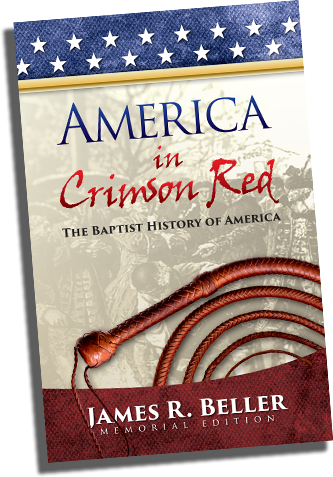
Secondly, I studied the history of the Baptists for nearly seven years before I released the book, “America in Crimson Red.” It took 7 years of study and 5 years of writing to finish. I certainly don’t expect everyone to believe all of my findings, but I assure you, everything that I say is documented. As an ex-Roman Catholic, held in chains to Rome for the first 17 years of my life, I do not come to conclusions in my research lightly, knowing how easy the printed page can deceive.
I entered into historical studies with absolutely zero bias. I, like most young men who attended Bible college, graduated with no knowledge of my Baptist fore-fathers—none. I had no prejudices because there was nothing taught. So as I studied, I was a blank page. After the release of America in Crimson Red, I was accused of being a “Landmarker,” or a “Brider,” just as VBP accused me in the first release, but I was neither. Facts are just what they are.
A major problem with the letter/booklet Did Roger Williams Start the First Baptist Church in America? is the mixing of arguments. Is VBP simply arguing for time difference? Did Roger Williams start before John Clarke? Or is this an argument of legitimacy? Was the baptism of Roger Williams illegitimate, making him ineligible to start a church? Is this an argument over church secession, or are we also going to argue about the universal church? Do we need to define “Landmarkism?” Do we need to define “Baptist Bride” beliefs? I would like to discuss church secession, the universal church, Landmarkism, etc., but not in this present arena. We know we have to address these matters, but we believe we ought to keep this present discussion focused on the first Baptist church in America and this we will do if God permit.
Thirdly, what I aim to do is quote from the third release of the letter/booklet and answer VBP directly:
1. The third release of the letter/booklet begins by informing the reader of the financial pressures currently experienced by VBP. We all can identify with this problem as the current economic downturn has caused every ministry in the country to suffer. The letter/booklet goes on to explain an idea to raise funds for VBP: sell prints of a photo of the alleged first Baptist church in America, the First Baptist Church in Providence, Rhode Island. In fact the letter/booklet, very boldly states:
“…over a period of five or six months, I have checked dozens of books and documents by Baptist writers and secular historians and have even accessed government records. I have found, without a doubt, that in 1638, Roger Williams started the First Baptist Church in America at Providence, Rhode Island.”
I want to point out the author’s phrase, without a doubt, because historically nothing could be further from the truth. The claim that Williams’s church is the first, or if Williams started a church at all, has been in doubt for quite some time. It is still a swirling controversy. It is a confusing subject because Williams repudiated his own baptism and walked away from the church. Some say the church “dissolved” or “came to nothing.” David Benedict sums up the controversy in his 1848 edition of the History of the Baptists on page 443:
“The more I study on this subject the more I am unsettled and confused. As to his retiring soon from the pastoral office there can be no dispute, but whether this was on account of the burden of public duties or from embarrassments in his feelings is a point by no means clear. It is a singular fact that in all his writings which have survived the waste of time controversial or epistolary no reference is made to this subject. Through all his life he showed no signs of heresy or schism but always appears the same orthodox and pious man, and this character has been universally ascribed to him by all candid writers who have made mention of his name. It has been said that he joined with the Seekers, became dissatisfied with all church organizations with his lay baptism &c and waited for the revival of a new and apostolical order of things.”
But how can we dismiss the testimony of John Comer, considered the first Baptist historian in American history? According to eyewitnesses to his historical papers, historian Edward Peterson, author of the History of Rhode Island, (John S. Taylor, publisher, 1853) on page 332, writes:
“The First Baptist Church in Providence has assumed two points which she is unable to maintain: First, her existence being prior to that of the church at Newport; secondly, that the church was founded by Roger Williams. Comer, the first, and for the early history of our denomination, the most reliable of writers, ascribes distinctly and repeatedly this priority to the Newport church. He (Comer) had formed the design, more than a hundred and twenty years ago, of writing the history of the American Baptists, and in that work which he only lived to commence, but which embraces an account of this church, he says in one place that it is the first of the Baptist denomination; and closing his history of it, he says: ‘Thus I have briefly given some account of the settlement and progress of the First Baptist church on Rhode Island, in New-England, and the first in America.’” (See Making of America Books online.)
Or shall we dismiss the testimony of John Callender, the second Baptist historian in American history and the sixth pastor of the First Baptist church in Newport, beginning his ministry in 1730? He made this footnote in his Historical Discourse of 1738, on page 56:
“Since this was transcribed for the Press, I find some Reasons to suspect, that Mr. Williams did not form a Church of the Anabaptists, and that he never join’d with the Baptist Church there. Only, that he allowed [believed] them to be nearest the Scripture Rule, and true primitive Practice, as to the Mode and Subject of Baptism. But that he himself waited for new Apostles, etc. The most ancient inhabitants now alive, some of them above eighty Years old, who personally knew Mr. Williams, and were well acquainted with many of the original Settlers, never heard that Mr. Williams formed the Baptist Church there, but always understood that Mr. Browne, Mr. Wickenden, Mr. Dexter, Mr. Olney, Mr. Tillingast, etc, were the first Founders of that Church.”
I hasten to say VBP has every right to try to better its financial situation, I hope they can, because they do a good work, and they proposed this in the first and second versions of the letter/booklet:
“We advertised the picture (of First Baptist, Providence) in the bimonthly VBP Newsletter for January/February, 2011, as representing the most strategic landmark of Baptist history and freedom of religion in America and put it on our online bookstore at a price that was $65 below the appraisal value.”
However the idea was not well received:
“Immediately, criticism and ‘reproof’ started. I have received numerous emails and letters informing me that Roger Williams did not start the first Baptist church in America.”
2. Next, the letter brings up the apparently “alien” baptism of Roger Williams:
“The critics claim even though Williams embraced Baptist doctrine and was baptized by immersion, he was not baptized by a qualified person; therefore, he was not qualified to start a
Baptist church.”
What the letter/booklet is referring to is the historical fact that Ezekiel Holliman “baptized” Roger Williams and then Williams baptized the other ten that were gathered. Isaac Backus refers to this in his History of New England Baptists, Vol. 1, p. 86:
“We are now come to an event which has made much noise in the world, I mean Mr. Williams’ baptism…one in the community was first appointed to baptize him and then he baptized the rest.”
There is still a lot of noise about this. I suppose the best way to think of this would be in a contemporary setting: Would any Baptist Christian think it decent and in order for an unbaptized person to baptize another? The ultimate exception to this rule of practice would be John the Baptist. Would we today claim that an unbaptized person could start a New Testament church? One might argue for self-baptism perhaps if there is no alternative, Backus argued this, as did John Spilsbury. However, Roger Williams had John Clarke in the same colony, or even Hanserd Knollys not far from him, either of whom could have administered baptism.
3. The letter/booklet of VBP now switches gears and opens a discussion on the Baptist Bride position. The letter/booklet states:
“The following quote is taken, word for word, from the doctrinal statement of a very reputable
and prominent Baptist Church: ‘The bride will be made up of the faithful members of the Lord’s New Testament Baptist Churches. There are others that will be saved but the bride of Christ is
the chosen of the elect. Others will be guests at this great wedding.’”
I wish we could have the name of the church that believes the above, no reference is cited. Only a few Baptists believe the above, I certainly do not. It is the “Baptist Bride” position, but if you believe this, I would not break fellowship with you.
4. At the bottom of page 3 of the letter/booklet, it is stated, “In 1644, Dr. John Clarke started the First Baptist Church of Newport, located just forty miles south of Providence.” This is the heart of the matter. The date of 1644 is not universally accepted. It is a date supposed by Isaac Backus. In fact Backus says, in his unabridged History of New England, with Particular Reference to the Baptists, Vol. 1 page 123, “about the year 1644.” He uses the term “about” because the date has always been in controversy. James W. Willmarth, in his supplementary notes in John Comer’s Diary (Providence: Published by the Rhode Island Historical Society, Edited by C. Edwin Barrows, D. D., 1893), on page 125 writes:
“The organization of the First Church was effected probably early in 1638, the year of the settlement of the colony. Mr. Clarke began his ministry as soon as the colonists arrived. John Winthrop, the governor of Massachusetts, assures us of this fact in a written statement made that very year; in 1638 he affirmed that Mr. Clarke was ‘preacher to those of the Island.’”
So the date of 1638 for John Clarke’s church at Newport is asserted by John Winthrop. The date of John Clarke’s Newport church is also confirmed as 1638 by John Callender, the second Baptist historian in America, writing in his Historical Discourse on the Civil and Religious Affairs of Rhode Island (Boston: Kneeland and Green, 1734), P. 62:
“The people who came to Rhode-Island, who were Puritans of the highest Form, had desired and depended on the Assistance of Mr. Wheelwright, a famous Congregational Minister aforementioned. But he chose to go to Long-Island, where he continued some Years. In the mean Time Mr. John Clark, who was a Man of Letters, carried on a publick Worship at the first coming.
Which means the church founding was at least 1638, the year John Clarke and the opinionists landed in Rhode Island. What these dates have to do with Landmarkism is beyond the pail of my understanding. They are simply facts.
5. On page 4 of the third version of the letter/booklet from VBP is found this statement: “…the Landmark Theory people claim his church was the First Baptist Church in America, and they reject Roger Williams as even being a Baptist.”
I am not sure what the “Landmark theory people” claim about Roger Williams. However, it is Roger Williams himself that rejected “even being a Baptist.” Roger Williams’s repudiation of his own baptism is one of the least controversial facts of this entire period. According to Isaac Backus, in An Abridgement of the Church History of New England (1804, reprint ed., Harvard: Harvard Library, 1935), on page 45 Backus states: “In March, 1639, he was baptized by one of his brethren, and then he baptized about ten more.” Williams then abandoned “such administrations among them.”
6. On page 4-7 of the letter/booklet by VBP, Bro. Fellure begins a discussion on the universal church theory and the meaning of passages in Romans 12 and I Corinthians 12 neither of which we will presently address. He then addresses the “Baptist Bride” issue on page 6 and informs us that the Protestants are also in the bride. Again, these things need to be addressed but it is not our present concern. “Landmark” or “Bride” positions are irrelevant to the timetable of John Clarke and Roger Williams.
On page 7, the VBP letter/booklet states:
“Historically, there are no records of churches that taught and practiced Baptist doctrine and principles that were linked to each other without a break in the chain all the way back to Christ.”
Well, pardon me, but if Baptist doctrine is Bible doctrine, and the Bible scriptures “cannot be broken” then Baptist people and their churches should exist throughout the ages just as Ephesians 3:21 says “ Unto him be glory in the church by Christ Jesus throughout all ages, world without end. Amen.” This is Biblical science, and I care not what VBP or any other opinion suggests. I doubt seriously that we can find man-made pieces of paper to trace these people, but the Bible indicates “the church” (of which each individual congregation is a representative, containing its distinctive teachings and practice), would exist throughout all ages. This line of “church” isn’t the Roman Catholic institution. Believing in this is sometimes called “principled succession,” and a whole slew of present-day Baptists count it true. Why? Because it is Biblical not historical. Yea, on page 8 of the VBP letter/booklet it is stated:
“Another popular analogy is that if you find some churches in the New Testament believing and practicing certain truths, and you find churches today believing and practicing those same truths, you can conclude that the later are descendants of the first through New Testament Baptist Church Succession, linked by water baptism, administered by a “qualified” person. However, genealogies are not supported by similarities, but by names. A Smith begets a Smith (or whatever the name may be), and there are no “Baptist” churches in the Bible to beget other Baptist churches. There are no spiritual genes passed down to a Baptist church through baptism that will cause that church to believe or behave in any certain way, regardless of who administered the baptism.”
The above criticism is on shaky ground, because “principled succession” has never been argued on the grounds of the name “Baptist.” (although it does occur more often than most realize) but rather the grounds of Biblical principles.
7. In an attempt to correct some of the errors of the first release of the letter/booklet, page 8 states:
“Historically, the only records of continuous links of the Baptist church in America I have found, are through conventions, associations, fellowships, etc. For example, the American Baptist Convention (ABC) traces its history back through the Northern Baptist Convention and the Triennial Convention, and finally to the First Baptist Church in America started by Roger Williams in Providence, Rhode Island, in 1638. In 1845, in Augusta, Georgia, a group of Christian men who disagreed with some practices of the Triennial Convention, separated from them and formed the Southern Baptist Convention (SBC). In 1932, another group separated from the ABC and formed the General Association of Regular Baptist Churches (GARBC). In 1905, a group of men in Arkansas, organized the Landmark movement…”
Although this third release of the letter/booklet tries to patch some of the errors in history given in the first two releases, there are still grievous errors in the above quote. We answer:
a) Does the writer of this letter/booklet believe conventions, associations and fellowships plant churches? No, once upon a time, churches planted churches. Yes sometimes those Baptist churches “associated” with each other, but each individual church followed the New Testament pattern; they planted churches from their existing churches.
b) The Triennial Convention was a very loose fellowship of Baptist churches which met yearly to discuss controversial subjects and encourage church planting and missions. They were from all over America and their churches were from several different streams, not just the church in Providence, R.I. . As we chronicled in America in Crimson Red, there were several “streams” from which the Baptists sprang in America. Here are a few examples:
1. The Baptist Church at Newport (Dr. John Clarke) were Englishmen who planted 5 of the first 7 churches in America. It planted the first Baptist church in Connecticut under the leadership of Valentine Wightman.
2. The Baptist Church at Swansey, R. I. (John Miles) This church came from Wales and was a prolific mother of many churches.
3. The first five churches of the Philadelphia Association were from England, Ireland and Wales. They planted scores of churches.
4. Shubal Stearns and the Separate Baptists. Stearns was converted in New England, and was baptized by Wait Palmer, who came from the group of churches started by the Newport church. Stearns and the Separate Baptists inundated the South with the Gospel and started 1,000 churches. Any Southern Baptist historian will testify that the SBC has its roots in the Separate Baptist revival and point back to Shubal Stearns. Most Independent Baptists in the South come from this stream.
5. The Baptist church at Charleston, S.C. came from the Baptist church in Boston, Mass. begun by Thomas Gould. The Charleston church was a great mother of churches.
c) The Southern Baptist convention formed because of the slavery issue in 1845.
The mistaken historic link is made again by VBP at the bottom of page 9 in the letter/booklet:
“The Baptist Bible Fellowship, the Bible Baptist Fellowship, the World Baptist Fellowship, and the Independent Baptist Fellowship International can all trace their history back to Dr. J. Frank Norris, an ordained Southern Baptist pastor who left the SBC and promoted and influenced the independent, fundamental, Baptist movement. Men such as Dr. John R. Rice, Dr. Jack Hyles, Dr. Lee Roberson, Dr. Harold Sightler, Dr. Shelton Smith, Lester Roloff, and many others had their roots in the Southern Baptist Convention, and the Southern Baptist Convention has its roots in the Triennial Convention from which came the Northern Baptist Convention and the American Baptist Convention, which are all linked back to Roger Williams and the First Baptist Church in America.”.
To make all these streams flow back from the church in Providence, R.I. is ridiculous.
8. On page 10 of the letter/booklet, is this statement:
“If Landmarkism or the Baptist Church Succession theory were true, and the link went back through Dr. John Clarke and finally back to John the Baptist, then not one of the pastors mentioned previously, or the converts who were saved and baptized under their ministry, are legitimate Baptists, and none of them will be in the Bride of Christ.”
I know of no one that believes what VBP has stated here and I challenge VBP to show me one Baptist preacher that believes such a thing. I surely do not. It was insinuated in the first release of this letter/booklet that I do believe this and I do not.
9. On page 11, we find this:
“Right away after we advertised the picture of the First Baptist Church in America in Providence, Rhode Island, which was started by Roger Williams in 1638, Baptist preachers began emailing me and saying Dr. John Clarke started the First Baptist Church in America.”
And why was the picture met with opposition? Because a large number of independent Baptists have become re-acquainted with their heritage. Our book, America in Crimson Red played a large part in that resurgence. And no, I was not “passionate about the Baptist bride position” when I did my study.
10. On page 12, the letter/booklet states:
“Many Baptist preachers in our day who say Dr. John Clarke started the First Baptist Church in America, claim he did it in 1638, and some give the date as early as 1637. According to many records of history, Dr. John Clarke and a group of his followers left Boston in 1638, but they did not start a Baptist church; they established a new colony and drew up a compact…”
VBP might believe this but the early historians certainly knew Dr. Clarke and his followers established a church immediately. (Or was it already established?) I refer to number 4 above, namely, James Willmarth, John Comer, John Callendar and John Winthrop testified that Clarke began immediately. But I think the actions of the Warren Association of Rhode Island, ought to hold the highest regard in this matter. In 1847, the controversy of the first Baptist church in Rhode Island and America was brought before the association. A booklet was published with the findings of the Warren Association about the controversy of the year of the beginning of John Clarke’s Newport church. Asa Hildreth, at the conclusion of the booklet, The First Church in Providence not the Oldest Baptist Chruch in America, (Texarkana: Baptist Sunday School Committee, 1939). wrote the following:
“The matter of the formation of the First Baptist Church was brought before the Warren Association at its meeting in 1847, and at the annual meeting of the association in 1848 the following votes were passed by that body:
First—That the date of 1638, inserted under the name of the First Baptist Church in Newport, contained in the tabular estimate in the minutes of last year, be stricken out and the date (1644) be inserted, as in the minutes of the years preceding.
Second—That a committee, consisting of T. C. Jameson, J. P. Tustin, and Levi Hale, be appointed to inquire into the evidence as to the date of the First Baptist Church in Newport, with instructions to report at the next session of the association.
This committee reported in 1849, that they are of the opinion that this church was formed certainly before the 1st of May, 1639, and probably on the 7th of March, 1638.”
11. On page 13, there is a fairly well written defense of John Clarke’s 1638 starting date which VBP dismisses with these words:
“The record is clear. Dr. Clarke and his followers did start a new colony, and there are references made by other writers about a church in this colony where Dr. Clarke preached, but out of all the books and documents I have read, I have not found one historical record stating Dr. John Clarke started any Baptist church before 1644.”
Well, it really is clear. Winthrop, Comer, Callendar and the Warren Association are very clear. Clarke’s church began in 1638 or earlier. You can choose to believe them or not.
Why is this important at all?
It is admitted by all that Roger Williams was baptized by Ezekiel Holliman, then Williams baptized 10 others. It is also admitted by all that Williams walked away from this flock sometime afterward. What was left of that group was either continued or re-organized by Chad Browne, Pardon Tillinghast, Dexter, and Wickendon. Thomas Olney was the pastor. There was a split. The old church continued under Olney. Wickenden, Dexter and Browne began anew. The old Olney church disbanded according to Callender’s discourse on page 61. It was many years before the splintered church in Providence ever produced another church. In the mean time, the Newport congregation became a lighthouse and a church planting church. It is to the church at Newport, we should look for our pattern. The Wickenden, Dexter and Browne congregation lived on as the First Baptist Church of Providence. And yes it did eventually begin to reach some of its potential.
12. The letter/booklet pages 13-18 give references crediting Roger Williams’ s church, the one that according to John Callendar disbanded, as the first Baptist church in America. There is no new evidence cited, the historians are simply relying on Isaac Backus for their information. The truth is, Mr. Backus makes a startling admission about the Providence church, on page 285 of volume 1 of his History of the New England Baptists writing that “no regular records before 1770 can now be found.” I appreciate Backus’ candor. This simply means Comer and Callendar give the only written records. It also means Backus is relying upon oral history coupled with the accounts of Winthrop. As much as I admire Backus, Mr. Backus simply refuses to believe Callendar or Comer, whose papers he held in his hand. I will leave it to other researchers to answer why.
What we have is an assumption by Isaac Backus, with Benedict, Armitage, etc., following suit. The testimony of those closest to the situation: John Winthrop , John Comer, John Callendar and the Warren Association should take precedence.
I rest my case, but let me tell you why this is important: the testimony of John Clarke ought to be upheld because his modal of preaching, practice, and church planting ought to studied and copied.
James Beller
That unworthy servant of Arnold, Missouri.
© 2011 Prairie Fire Press, 21tnt.com


